The Mellified Man was...strAInge
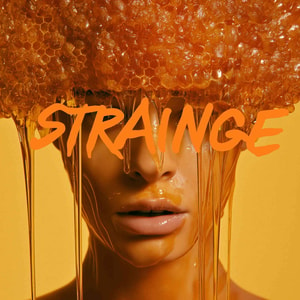
The Honey-based strangeness
The Mellified Man — Show Notes
The Mellified Man is the story of one of the strangest substances ever claimed to have been used as medicine: a human body supposedly transformed into a medicinal confection by honey.
The legend describes an elderly man who voluntarily prepares for death by consuming honey and, according to the account, eventually having his body sealed in a honey-filled coffin. After a century, the preserved remains are supposedly opened and used as medicine for wounds, fractures, and other ailments.
The story is remarkable—but its historical status is much less certain than the legend itself.
What Was the Mellified Man?
The mellified man, sometimes called a human mummy confection, was supposedly produced by preserving a human corpse in honey. The best-known account appears in the Bencao Gangmu, the enormous Chinese medical encyclopedia compiled by Li Shizhen in the sixteenth century.
Li's account is particularly interesting because he did not present the story as established fact. He attributed it to an earlier writer and explicitly expressed doubt about whether it was true. The account described the practice as originating among Arabs, rather than identifying it as a Chinese medical practice.
The Supposed Process
According to the account, an elderly man—said to be around seventy or eighty—would voluntarily offer his body for medicinal purposes.
He would consume honey and reportedly bathe in it. The story claims that eventually his bodily excretions became honey-like. After his death, his body would be placed in a stone coffin filled with honey and sealed.
The coffin would remain closed for one hundred years.
When it was eventually opened, the resulting honey-preserved material was supposedly divided into small portions and used medicinally, particularly for wounds and broken bones.
Was It Real?
This is the crucial question.
There is no solid archaeological evidence demonstrating that mellified men were actually produced according to the famous recipe.
The principal written source is itself cautious about the story's reliability. The Bencao Gangmu records the account but essentially leaves the question of its truth to the reader.
That makes the mellified man much more interesting than simply calling it an "ancient medical practice." It is better understood as a reported medical legend whose existence as a story is considerably better documented than its existence as a physical medicine.
Why Honey?
Honey is not an arbitrary ingredient.
Honey has a remarkably long history in medicine, and its resistance to spoilage helped give it an association with preservation. Ancient cultures used honey medicinally, including for wounds, and honey was also used in various contexts involving preservation of the dead.
That real history provides an important foundation for the mellified-man story.
The legend takes honey's genuine reputation for preservation and healing and carries it to an extraordinary conclusion: what if a human body could itself be preserved and transformed into medicine?
Ancient and Medieval Medicine
The mellified man belongs to a much larger history in which medicine could include substances that modern medicine would regard as extremely unusual.
Human remains, animal products, minerals, plants, and other materials all appeared in historical medical traditions.
This doesn't necessarily mean that people regarded these remedies as magical. Earlier physicians were working within completely different understandings of the body, disease, preservation, and the properties of natural substances.
The mellified man sits at the particularly fascinating intersection of medicine, folklore, preservation, and belief.
The Question of Cannibalism
The story also raises the disturbing subject of medicinal cannibalism—the historical use of human-derived materials as medicine.
That practice is documented in various historical contexts, although it is important not to conflate every tradition involving human remains with the specific mellified-man legend.
The mellified man represents an especially extreme version of the idea: the human body does not merely become an ingredient in medicine; an entire life is supposedly dedicated to becoming the medicine.
Alexander the Great
Honey and the preservation of bodies have also been connected in later accounts of Alexander the Great. Some traditions claim that Alexander's body was transported in honey after his death.
These accounts should be treated cautiously. They demonstrate the longstanding association between honey and preservation, but they are not evidence that the mellified-man process actually existed.
The Dervish House
The mellified man has found an especially memorable modern use in science fiction.
In Ian McDonald's 2010 novel The Dervish House, set in a near-future Istanbul, antiquarian Ayşe becomes involved in a search for a centuries-old body preserved in honey.
The mellified man becomes part of the novel's larger collision between ancient traditions and futuristic technology. A legend originating in old accounts of medicine and Arabia becomes a mysterious object of desire in a technologically transformed Istanbul.
This is a particularly appropriate use of the legend because the mellified man already exists between categories: ancient and modern, medicine and myth, science and folklore.
Why Does the Story Survive?
Perhaps the most compelling thing about the mellified man is that its historical uncertainty has not diminished its cultural power.
The story combines several enduring human obsessions:
- the fear of death
- the desire to preserve the body
- the search for cures
- sacrifice for others
- the transformation of death into usefulness
- the possibility that something of a person might survive after death
The physical mellified man may be impossible to establish.
The legendary mellified man, however, has unquestionably survived.
And that may be the strangest part of the story: the body was supposedly preserved for a hundred years, but it is the story itself that has proved most resistant to decay.
Further Reading & Links
- Mellified Man — Wikipedia overview and historical sources
- The Mellified Man — Historic Mysteries
- National Geographic — Dying Bees Spell Trouble for U.S. Agriculture — includes a discussion of the mellified man and the history of medicinal honey
- The Dervish House — Goodreads
- The Dervish House — Strange Horizons review — particularly useful for the mellified-man storyline in McDonald's novel
- The Dervish House — ProQuest review
Key Names
Li Shizhen (1518–1593) — Chinese physician and author of the Bencao Gangmu, the major sixteenth-century medical encyclopedia containing the famous account.
Tao Zongyi (c. 1329–c. 1410) — Yuan/Ming-era Chinese scholar whose reported account was incorporated into the mellified-man tradition.
Ian McDonald — Science-fiction author who incorporated the mellified man into The Dervish House.
The Bencao Gangmu — Sixteenth-century Chinese materia medica and one of the most important written sources for the legend.
The Dervish House (2010) — Ian McDonald's science-fiction novel in which the mellified man becomes part of a modern quest in future Istanbul.
This podcast is powered by Pinecast.